Tap any reference to open that chapter in XA Daily — free, no account.
The Bible opens in a garden full of trees, turns on a piece of wood outside Jerusalem, and closes with a tree growing beside a river. In between it names the timbers by species and tells you what each one was for.
Some of it is joinery. Some of it is poetry. And one word in the middle of it has never been translated, because nobody is certain what it means.
The wood nobody can identify
Genesis 6:14 — Make thee an ark of gopher wood; rooms shalt thou make in the ark, and shalt pitch it within and without with pitch.
Gopher wood is not a translation. It is the Hebrew word left standing, because the translators did not know what tree it was and were honest enough not to guess.
The word appears once in the entire Bible. Nowhere else, in any context, that might narrow it down. Every identification you will read — cypress, pine, cedar, laminated wood, resinous wood — is inference from the sound of the word or from what grew in the region.
Cypress is the most common suggestion, partly because the Hebrew gofer and the Greek kuparissos are not far apart, and partly because cypress resists rot and was used for ships all over the ancient Mediterranean. It is a reasonable guess. It is still a guess.
The wood the ark of the covenant was made from
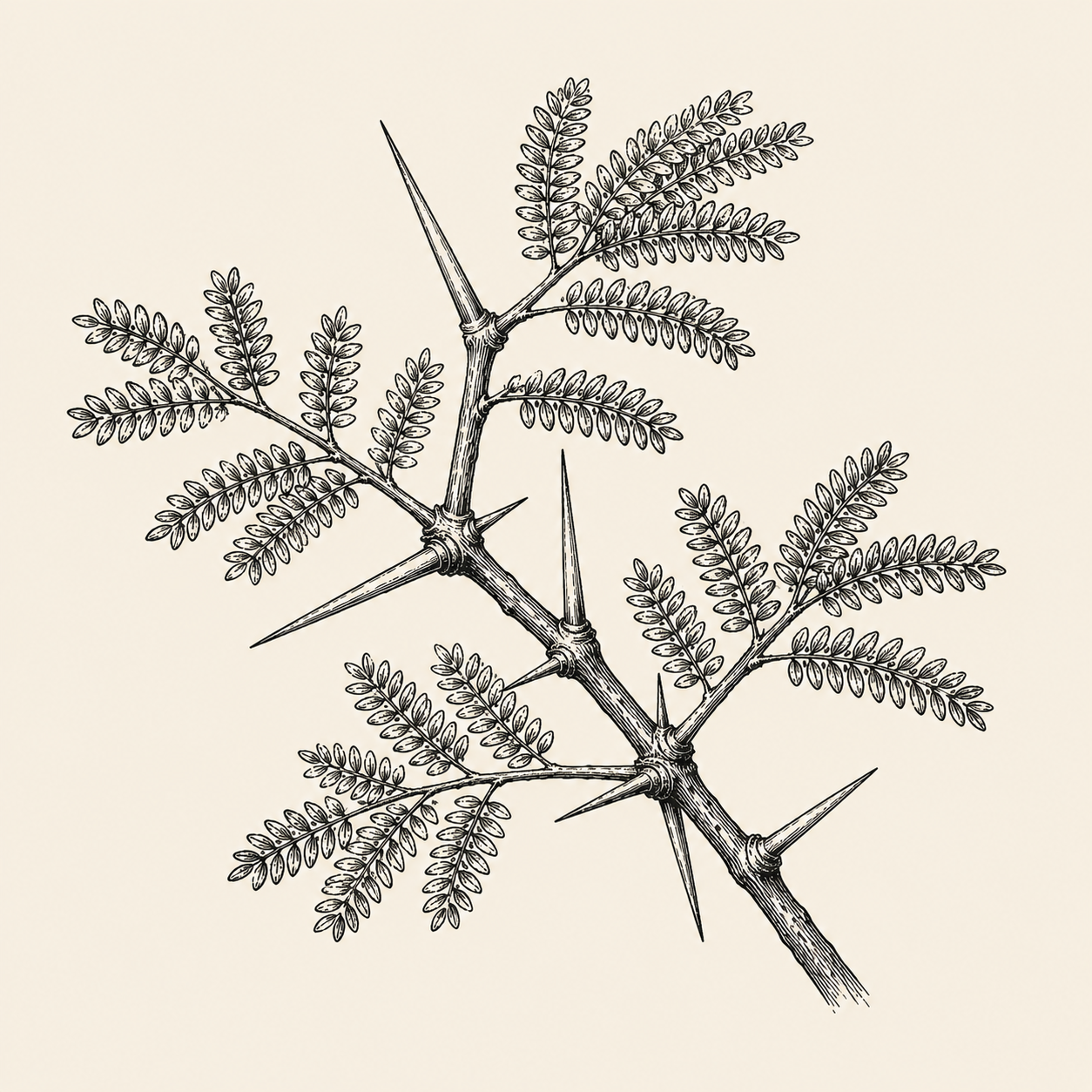
Exodus 25:10 — And they shall make an ark of shittim wood: two cubits and a half shall be the length thereof, and a cubit and a half the breadth thereof, and a cubit and a half the height thereof.
This is a different ark and a different word. Shittim is acacia — and unlike gopher wood we know exactly what it is, because the tree still grows in the Sinai today.
It is worth understanding why acacia and nothing else. Israel was in a desert. Acacia is one of very few trees that survives there, and it happens to be almost perfectly suited to the job: dense, hard, close-grained, and naturally resistant to insects and rot. The heartwood is dark and heavy enough to be difficult to work.
Exodus 26:15 — And thou shalt make boards for the tabernacle of shittim wood standing up.
The whole tabernacle is built from it. Every board, every pole, every frame. God gave them a design that could be built from the one tree that was actually there.
And there is a detail people miss. Acacia is thorny — heavily so, long white spines all over it. The most sacred object in Israel was made from a thorn tree.
The cedars of Lebanon
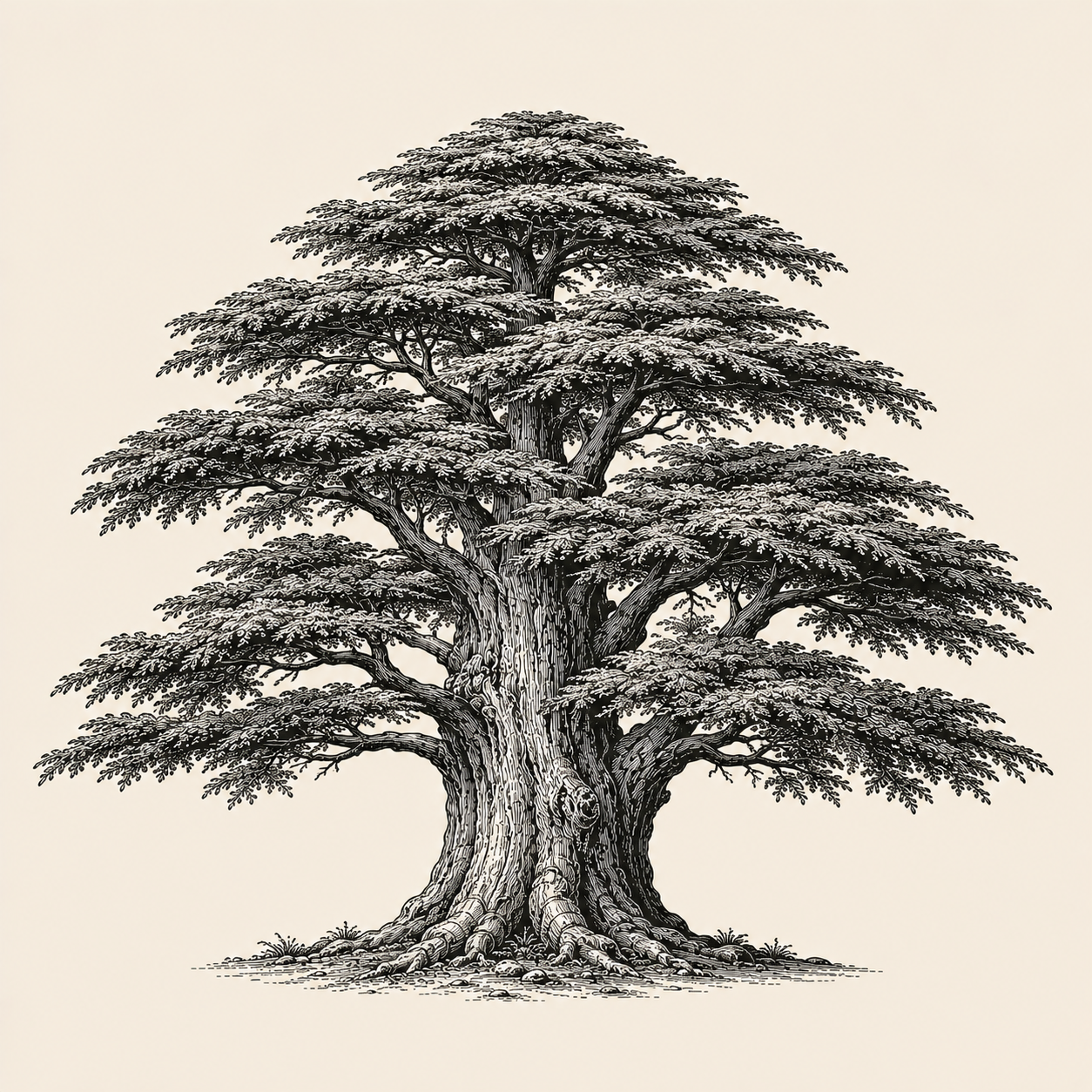
1 Kings 5:6 — Now therefore command thou that they hew me cedar trees out of Lebanon; and my servants shall be with thy servants: and unto thee will I give hire for thy servants according to all that thou shalt appoint: for thou knowest that there is not among us any that can skill to hew timber like unto the Sidonians.
Solomon does not have cedar and knows it. He writes to Hiram of Tyre because Lebanon has the tree and Israel does not, and he pays for it in wheat and oil.
Cedar of Lebanon — Cedrus libani — grows to well over a hundred feet with a trunk you cannot get your arms around. It is aromatic, and the oils that give it the smell also make it resistant to rot and insects. That combination is why it was the prestige timber of the entire ancient world: Egypt imported it, Assyria took it as tribute, and the Phoenicians built their fleets from it.
1 Kings 6:15 — And he built the walls of the house within with boards of cedar, both the floor of the house, and the walls of the ceiling: and he covered them on the inside with wood, and covered the floor of the house with planks of fir.
Read that carefully. The temple is stone, and then it is lined entirely in cedar so that no stone shows. The most expensive material in the building is the part covering up the structure.
Psalm 92:12 — The righteous shall flourish like the palm tree: he shall grow like a cedar in Lebanon.
Two trees, deliberately chosen. The palm bends in wind and bears fruit for decades. The cedar does not bend at all.
Olive, fir and the wood that had a name and lost it
1 Kings 6:23 — And within the oracle he made two cherubims of olive tree, each ten cubits high.
Olive for the cherubim. Olive wood is dense and beautifully figured, but olive trees are slow, gnarled and rarely straight — getting two ten-cubit carvings out of it would have been genuinely difficult. It was chosen anyway.
1 Kings 10:12 — And the king made of the almug trees pillars for the house of the LORD, and for the king’s house, harps also and psalteries for singers: there came no such almug trees, nor were seen unto this day.
Almug is the other mystery wood. It arrives by ship from Ophir, it is used for temple pillars and for musical instruments, and the text says plainly that nothing like it was ever seen again. Red sandalwood is the usual suggestion. Nobody knows.
Note what it was used for: structure and music. A timber good enough for both is unusual — instrument wood needs to be stiff and resonant, building timber needs to be strong. The mention of harps is not decoration; it is a specification.
The trees that are people
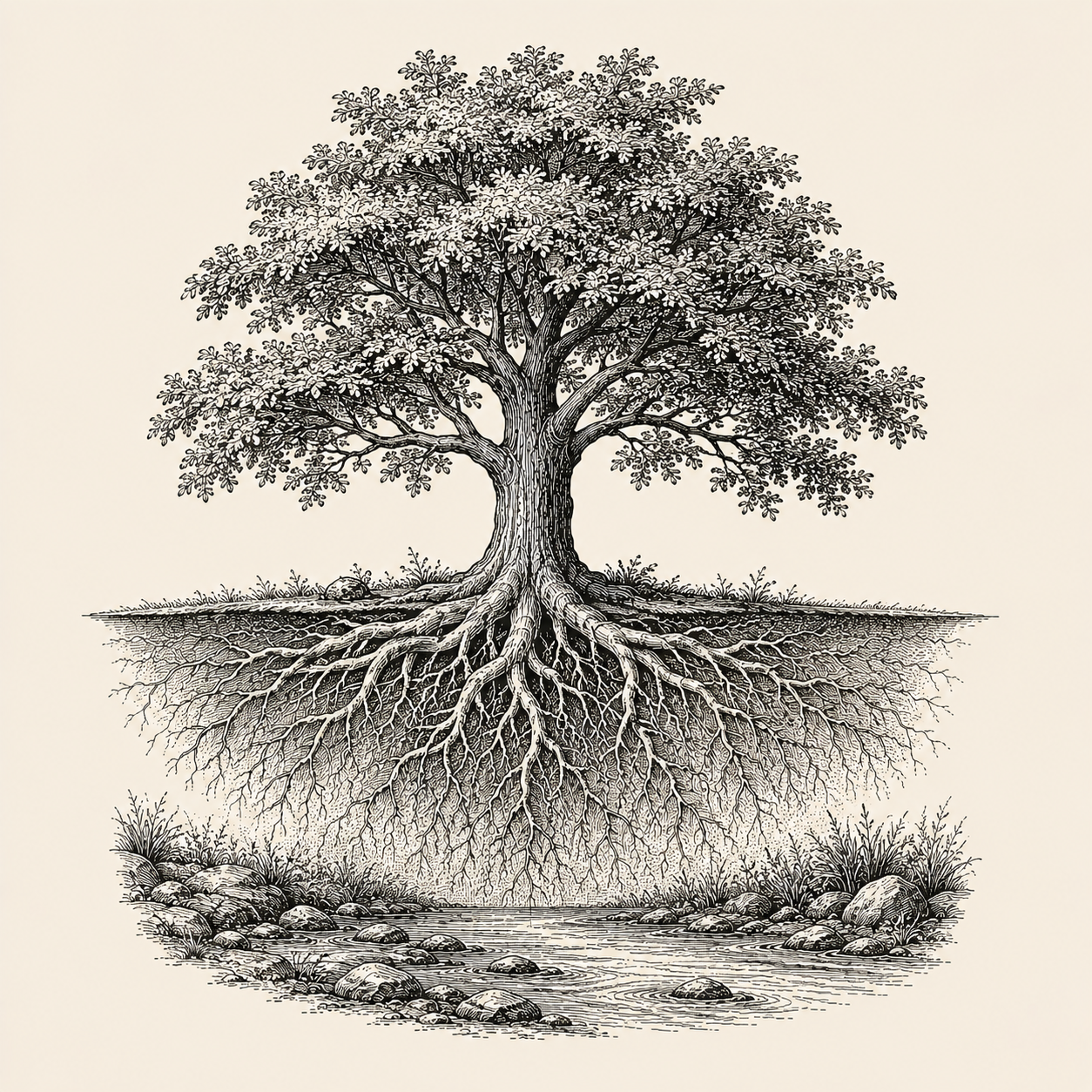
Psalm 1:3 — And he shall be like a tree planted by the rivers of water, that bringeth forth his fruit in his season; his leaf also shall not wither; and whatsoever he doeth shall prosper.
The image is precise about location. Not a strong tree, or a large one — a planted one, and planted by water. Everything the tree is credited with comes from where it is standing.
Jeremiah 17:8 — For he shall be as a tree planted by the waters, and that spreadeth out her roots by the river, and shall not see when heat cometh, but her leaf shall be green; and shall not be careful in the year of drought, neither shall cease from yielding fruit.
Jeremiah takes the same picture further and adds the drought. The tree is not spared the heat. It simply is not anxious in it, because the roots reached water long before the dry year arrived.
Isaiah 11:1 — And there shall come forth a rod out of the stem of Jesse, and a Branch shall grow out of his roots:
The stem of Jesse is a stump. The house of David has been cut down, and Isaiah is describing the shoot that comes up out of the cut. It is a picture only someone who has felled a tree would choose — you cut it down and the following spring it sends up a rod anyway.
The trees that argue
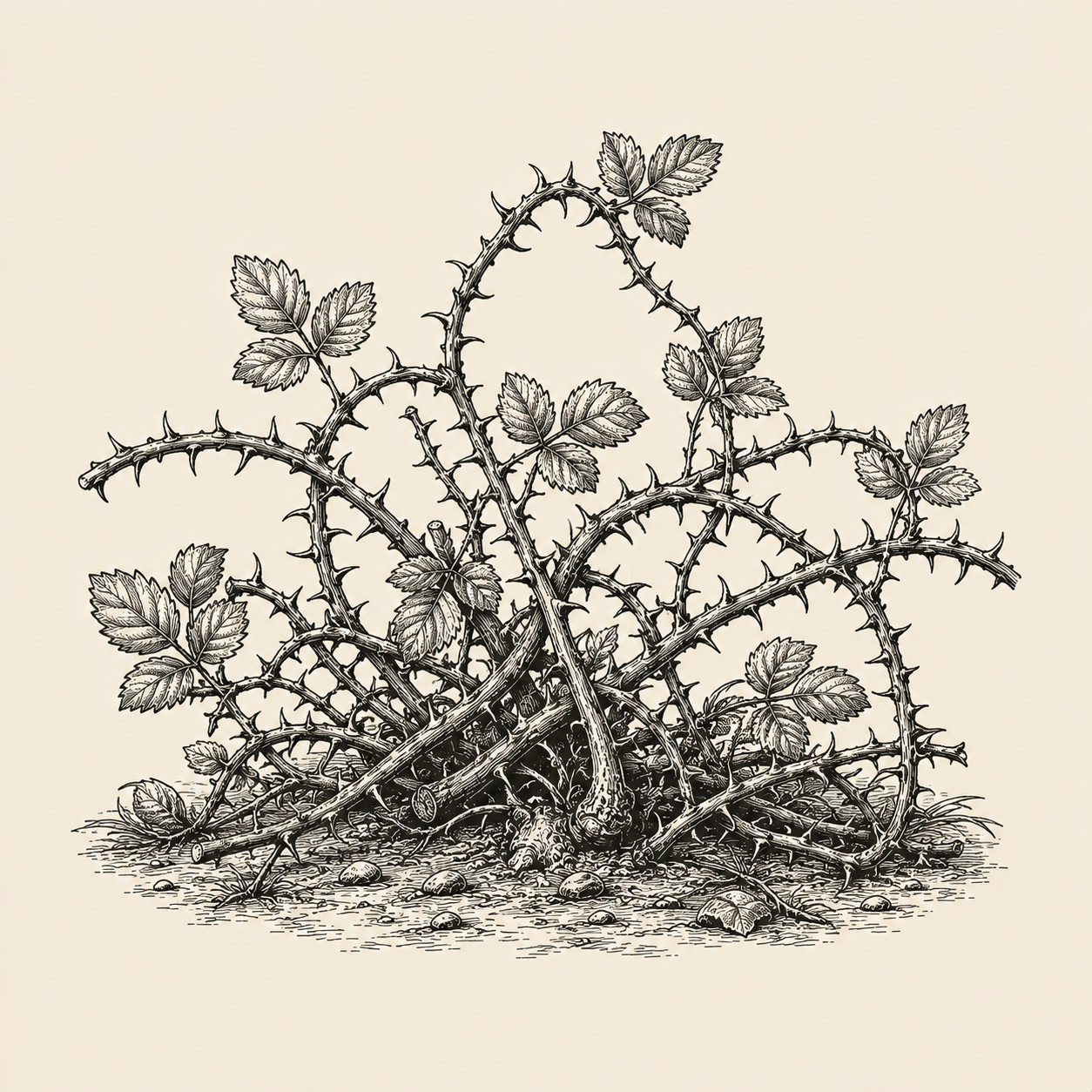
Judges 9:8 — The trees went forth on a time to anoint a king over them; and they said unto the olive tree, Reign thou over us.
This is Jotham’s fable, and it is the oldest fable in the Bible. The trees go looking for a king. The olive, the fig and the vine all refuse — each says it is too busy doing what it was made for to go and sway over the others.
Judges 9:15 — And the bramble said unto the trees, If in truth ye anoint me king over you, then come and put your trust in my shadow: and if not, let fire come out of the bramble, and devour the cedars of Lebanon.
So the job goes to the bramble: no fruit, no timber, no shade worth standing in, and highly flammable. The only plant with nothing better to do is the one that ends up in charge.
The small things
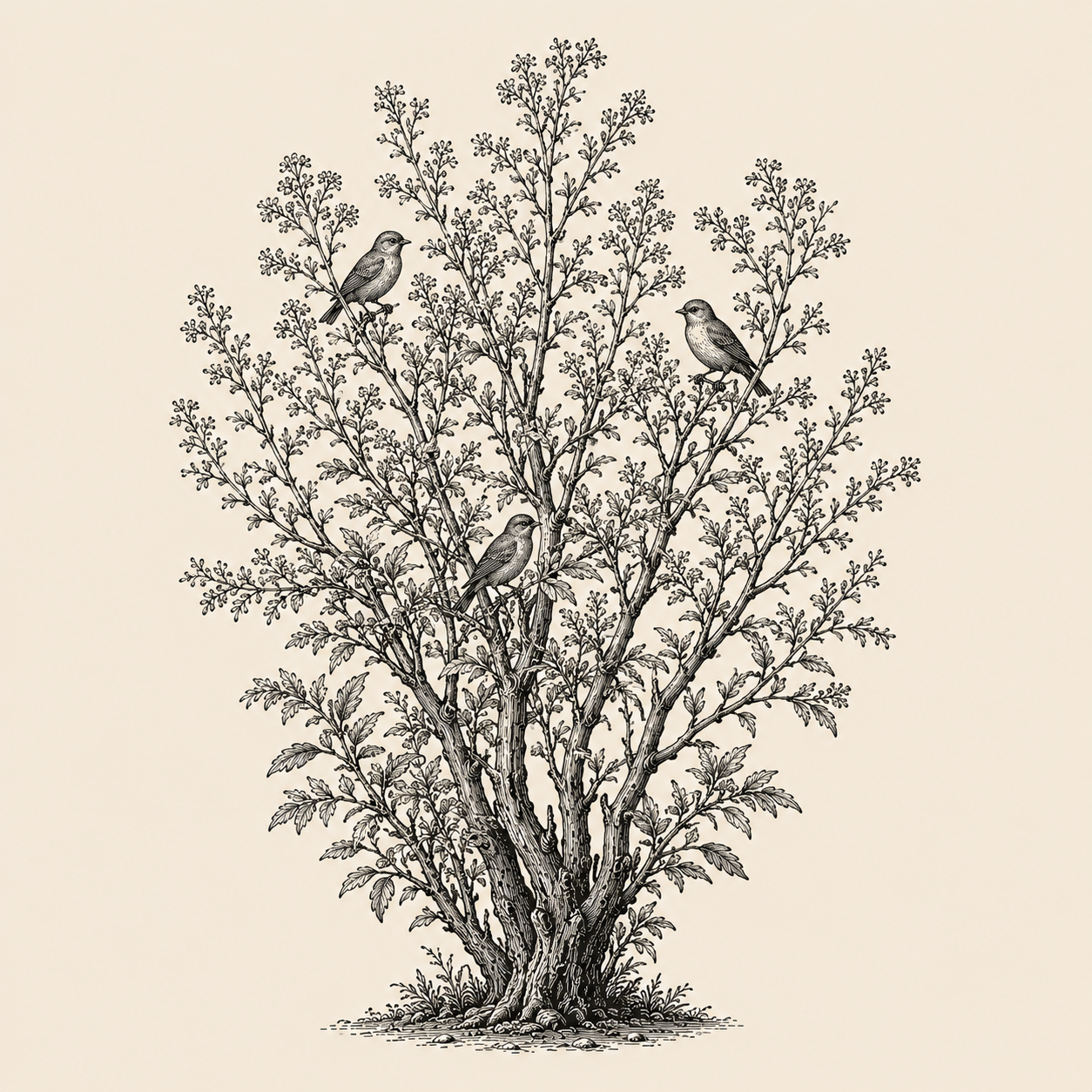
Matthew 13:32 — Which indeed is the least of all seeds: but when it is grown, it is the greatest among herbs, and becometh a tree, so that the birds of the air come and lodge in the branches thereof.
People argue about whether mustard is truly the smallest seed. That misses the register — it was a proverbial expression for something tiny, the way we say a drop in the ocean. Black mustard in Israel does grow into a woody shrub several feet high that birds will sit in, which is the whole point of the picture.
Matthew 6:28 — And why take ye thought for raiment? Consider the lilies of the field, how they grow; they toil not, neither do they spin:
Consider the lilies uses the same verb as consider the ravens. Twice He points at something growing or flying and says look at it properly.
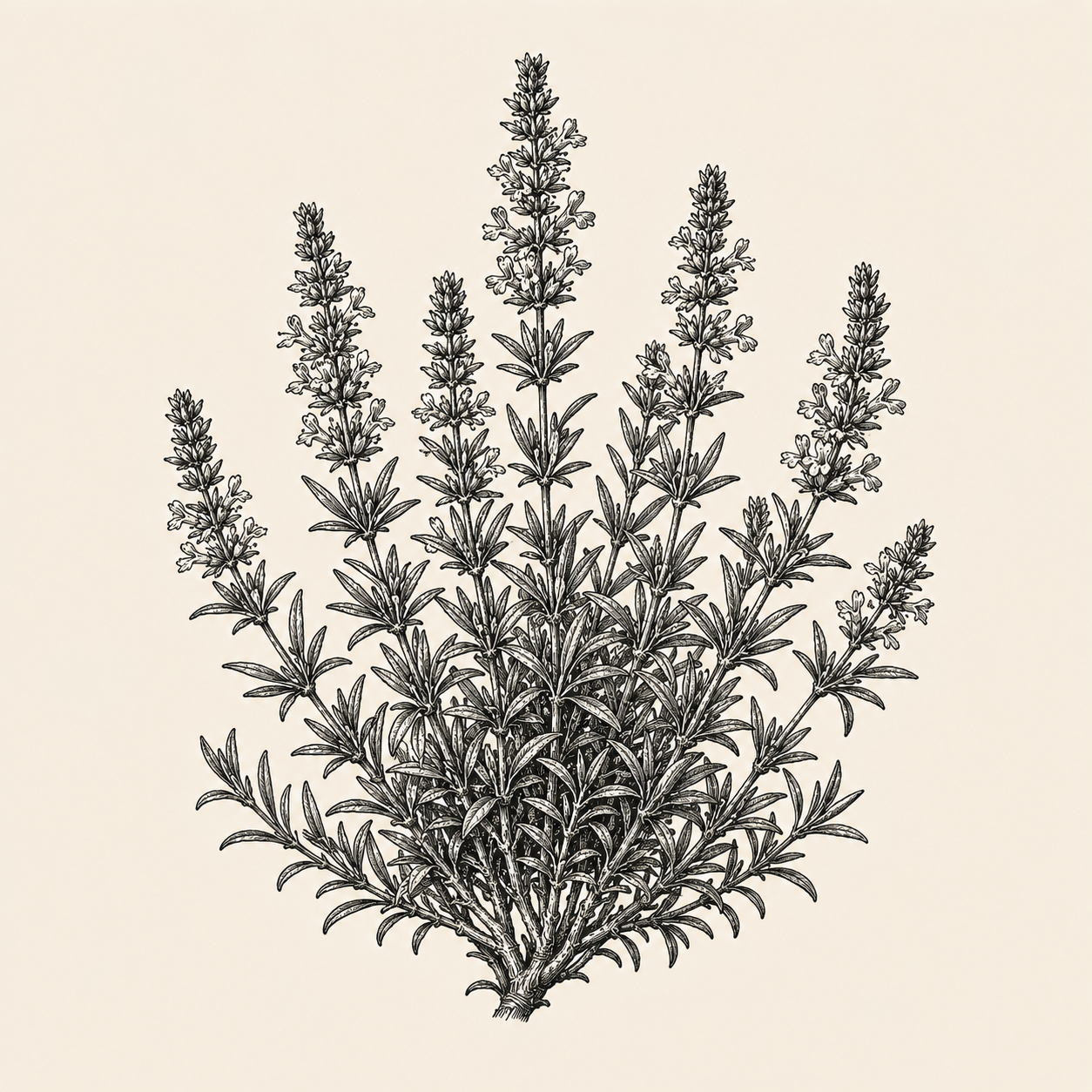
Exodus 12:22 — And ye shall take a bunch of hyssop, and dip it in the blood that is in the bason, and strike the lintel and the two side posts with the blood that is in the bason; and none of you shall go out at the door of his house until the morning.
Hyssop is worth following through the book. It is a small bushy herb, and the reason it appears at Passover is practical — the leaves hold liquid well, so a bunch of it works as a brush.
Psalm 51:7 — Purge me with hyssop, and I shall be clean: wash me, and I shall be whiter than snow.
David asks to be cleaned with the same plant that painted the blood on the doorposts.
John 19:29 — Now there was set a vessel full of vinegar: and they filled a spunge with vinegar, and put it upon hyssop, and put it to his mouth.
And it turns up a third time, at the cross, lifting vinegar to His mouth. The herb from the first Passover is present at the last one.
The tree that is not a tree
Acts 5:30 — The God of our fathers raised up Jesus, whom ye slew and hanged on a tree.
The cross is called a tree four separate times in the New Testament, and the Greek word is xylon — timber, wood, a beam. It is not a poetic flourish. It is a deliberate quotation.
Deuteronomy 21:23 — His body shall not remain all night upon the tree, but thou shalt in any wise bury him that day; (for he that is hanged is accursed of God;) that thy land be not defiled, which the LORD thy God giveth thee for an inheritance.
Galatians 3:13 — Christ hath redeemed us from the curse of the law, being made a curse for us: for it is written, Cursed is every one that hangeth on a tree:
Paul is reaching back to Deuteronomy on purpose. The law said a man hanged on a tree is under a curse. He takes that verse, does not soften it, and says that is exactly what happened and exactly why it worked.
1 Peter 2:24 — Who his own self bare our sins in his own body on the tree, that we, being dead to sins, should live unto righteousness: by whose stripes ye were healed.
Where it started and where it ends
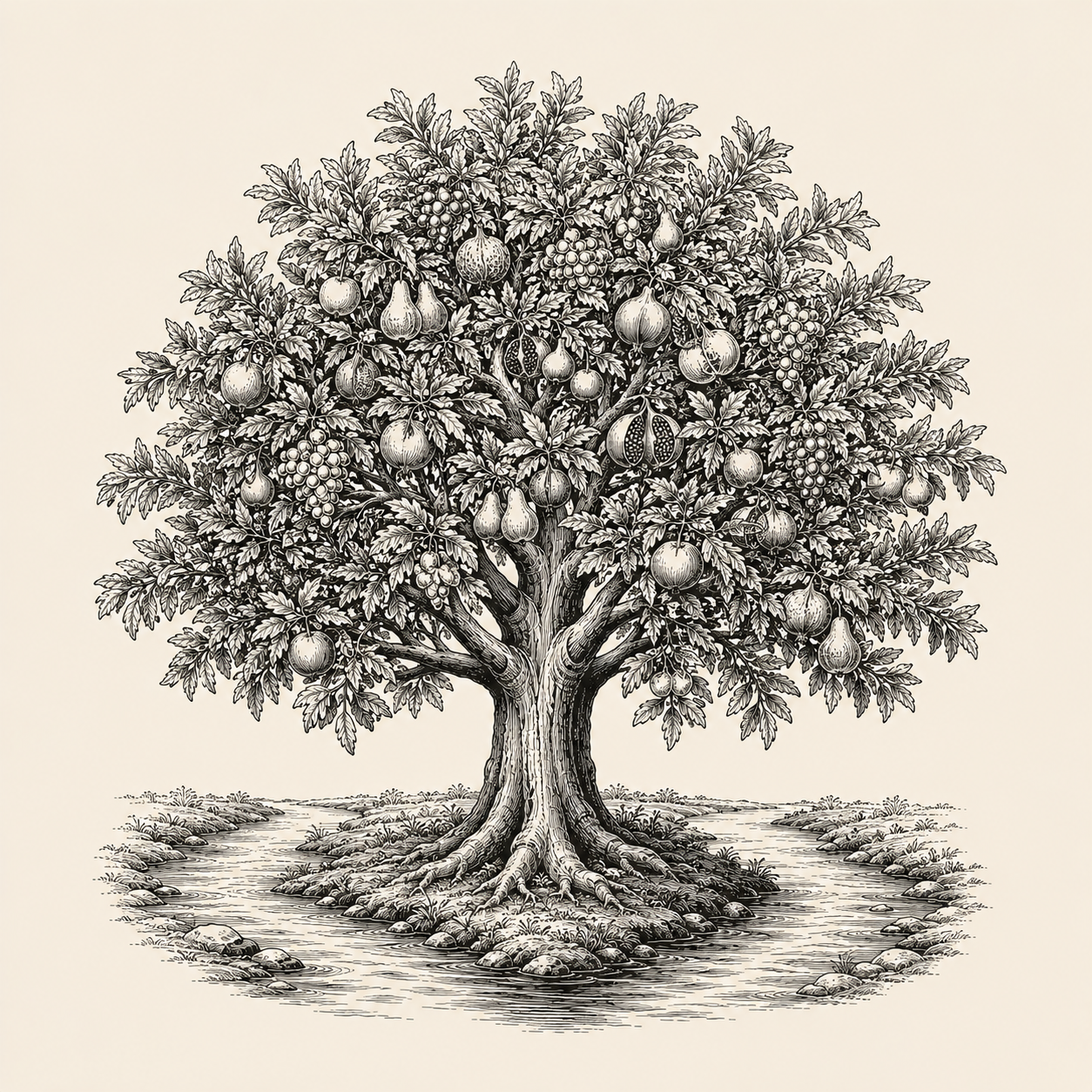
Genesis 2:9 — And out of the ground made the LORD God to grow every tree that is pleasant to the sight, and good for food; the tree of life also in the midst of the garden, and the tree of knowledge of good and evil.
Two trees in the middle of the garden, and the trouble starts at one of them.
Genesis 3:6 — And when the woman saw that the tree was good for food, and that it was pleasant to the eyes, and a tree to be desired to make one wise, she took of the fruit thereof, and did eat, and gave also unto her husband with her; and he did eat.
Note the order of the description — good for food, pleasant to the eyes, desirable. The tree is not the problem. The reaching is.
Revelation 22:2 — In the midst of the street of it, and on either side of the river, was there the tree of life, which bare twelve manner of fruits, and yielded her fruit every month: and the leaves of the tree were for the healing of the nations.
And there it is again at the very end, on both sides of the river this time, fruit every month, and the leaves are for healing. The thing that was guarded and closed off in Genesis is standing in the open street with nobody keeping anyone away from it.
What the wood is for
Read the timbers together and a pattern shows up, and it is not the one you would expect.
The cedar is the famous one — huge, fragrant, expensive, imported at royal cost. It lines a temple that stood for a few hundred years and was destroyed.
The acacia is a thorn tree out of a desert that nobody would plant on purpose. It carried the covenant.
The gopher wood saved every living thing and we do not even know what it was.
And the wood that matters most in the whole book is not named at all. Nobody records the species. It is only ever called a tree.
Every verse here opens in XA Daily, which carries the whole King James Bible, searchable, alongside a Hebrew word each morning and room to write. Free, no account, works offline.