
Tap any reference to open that chapter in XA Daily — free, no account.
Bible Gateway has been online since 1993 and has been viewed more than fourteen billion times. When they looked at what people actually typed into the search box across those twenty-five years, the answer was not a verse. It was a list of ten words.
Here they are, in order: love, faith, peace, hope, joy, prayer, Holy Spirit, grace, healing, forgiveness.
That list is worth sitting with. Nobody searches for a word they are comfortable with. People type these into a search box because something has happened, or is about to.
And every one of them is an English word standing in for something older and more specific. This is a walk through all ten — what the Hebrew or the Greek underneath is actually doing, and one verse to take with you.
1. Love
English has one word and does a great deal of work with it. Scripture has several.
The Hebrew you meet most in the Old Testament is ahavah, ordinary affection and devotion. But the word that carries the covenant is chesed — usually rendered lovingkindness or mercy, and almost impossible to translate in one go. It means loyal love. Love that has made a promise and will not be talked out of it.
The Greek in the New Testament is agape. Not affection, not friendship, not desire — there were separate words for all three. Agape is love as a decision and an action.
1 John 4:8 — He that loveth not knoweth not God; for God is love.
Not God has love. God is love. It is not one of His moods.
2. Faith
The Hebrew is emunah, from the root aman — to be firm, to be dependable. The same root gives us amen. It describes steadiness under load rather than a feeling of certainty.
The Greek pistis carries trust and faithfulness together. In ordinary Greek it was a commercial word: the reliability that lets someone extend you credit.
Hebrews 11:1 — Now faith is the substance of things hoped for, the evidence of things not seen.
Substance and evidence. Both are solid words. Faith in scripture is not the absence of proof; it is standing on something you cannot yet see.
3. Peace
Shalom does not mean the absence of trouble. It means wholeness — nothing missing, nothing broken. You can have shalom in the middle of a war, and you can lack it in a quiet house.
That is why it works as a greeting and a farewell. You are not wishing someone a lack of conflict. You are wishing them completeness.
Isaiah 26:3 — Thou wilt keep him in perfect peace, whose mind is stayed on thee: because he trusteth in thee.
The Hebrew there is literally shalom shalom — peace, peace. Hebrew doubles a word to intensify it. Perfect peace is the translators doing their best with a man saying it twice.
4. Hope

This is the one that surprises people. The Hebrew is tikvah, and its root meaning is a cord. A rope. The same word is used for the scarlet thread Rahab hung from her window.
Biblical hope is not wishing. It is a line thrown to you, already fastened at the other end.
Jeremiah 29:11 — For I know the thoughts that I think toward you, saith the LORD, thoughts of peace, and not of evil, to give you an expected end.
Worth knowing what surrounds it: this is written to people already in exile, and the next verses tell them to build houses and plant gardens because they are going to be there seventy years. It is not a promise that things will be easy soon. It is a rope handed to people who are staying put a while.
5. Joy
The Hebrew simchah is loud. It is the word for a feast, a wedding, dancing. Not contentment — celebration.
Nehemiah 8:10 — Then he said unto them, Go your way, eat the fat, and drink the sweet, and send portions unto them for whom nothing is prepared: for this day is holy unto our LORD: neither be ye sorry; for the joy of the LORD is your strength.
Read the setting. The people have just heard the law read aloud for the first time in generations and they are weeping, because they can hear how far off they have been. And they are told to stop crying, eat well, send food to anyone who has none, because the joy of the LORD is your strength. Joy arrives here as an instruction, not a mood.
6. Prayer
The Hebrew tefillah comes from a root meaning to intervene or to judge, and its reflexive form carries the sense of examining oneself. Prayer in Hebrew is not only talking upward. Part of it is looking inward.
Philippians 4:6 — Be careful for nothing; but in every thing by prayer and supplication with thanksgiving let your requests be made known unto God.
Be careful for nothing is old English for be anxious about nothing. The instruction is not to stop feeling it. It is to move it — every single thing, with thanks attached.
7. Holy Spirit

The Hebrew is Ruach HaKodesh. Ruach means breath, or wind — the same word used for the wind that moved over the water in Genesis 1, and for the breath God breathed into the man.
The Greek pneuma does the same double duty. It is where we get pneumatic.
John 14:26 — But the Comforter, which is the Holy Ghost, whom the Father will send in my name, he shall teach you all things, and bring all things to your remembrance, whatsoever I have said unto you.
The King James says Comforter. The Greek is parakletos — literally one called alongside. It was a courtroom word. The person who stands next to you when you are up against something.
8. Grace
The Greek is charis, and it sits inside a family of words: charisma, a gift; eucharistia, thanksgiving. Grace, gift and gratitude are the same root in Greek and it is hard to separate them.
Ephesians 2:8 — For by grace are ye saved through faith; and that not of yourselves: it is the gift of God:
Note the grammar. Saved by grace, through faith. Grace is the means; faith is the channel. Paul is careful about which preposition goes where, and the verse falls apart if you swap them.
9. Healing
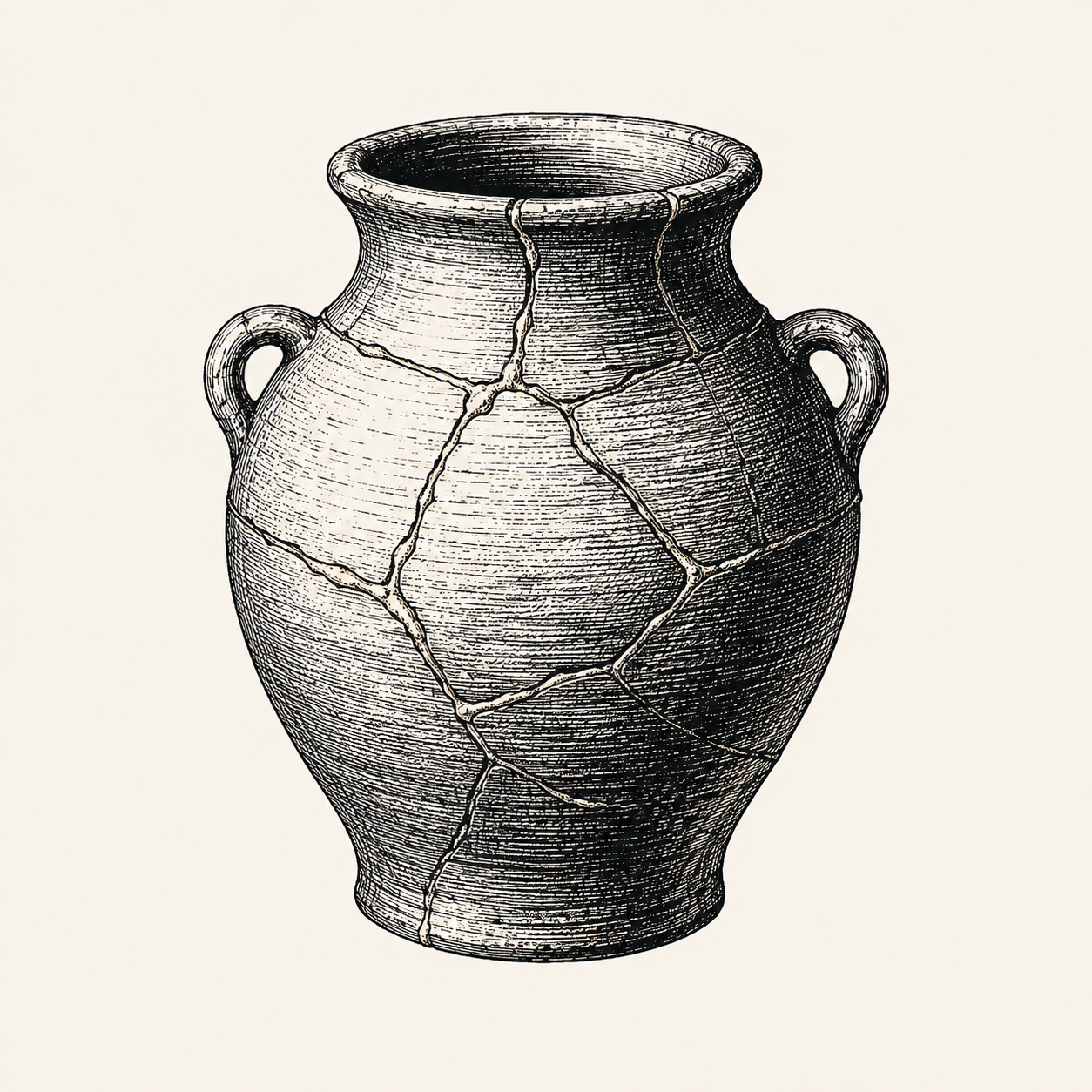
The Hebrew rapha means to mend or to repair. It is used of a doctor, and of a potter fixing a cracked vessel, and of God.
Exodus 15:26 — And said, If thou wilt diligently hearken to the voice of the LORD thy God, and wilt do that which is right in his sight, and wilt give ear to his commandments, and keep all his statutes, I will put none of these diseases upon thee, which I have brought upon the Egyptians: for I am the LORD that healeth thee.
That is the first time in scripture God attaches a name to Himself in this form — Jehovah Rapha, the LORD that healeth thee. It is said three days after the Red Sea, to people complaining about bitter water. The timing is the point.
Isaiah 53:5 — But he was wounded for our transgressions, he was bruised for our iniquities: the chastisement of our peace was upon him; and with his stripes we are healed.
10. Forgiveness

Two Hebrew words matter here. Salach is only ever used of God forgiving — people are never its subject. And nasa means to lift and carry away, the word for picking something up and taking it off somewhere else.
The Greek aphesis is a release word. It was used for cancelling a debt and for letting a prisoner go.
Psalm 103:12 — As far as the east is from the west, so far hath he removed our transgressions from us.
East and west is the deliberate choice. North and south have poles — travel far enough and you start coming back. East and west never meet. The distance in that verse has no end.
1 John 1:9 — If we confess our sins, he is faithful and just to forgive us our sins, and to cleanse us from all unrighteousness.
What the list says
Read the ten together and a pattern shows up. Almost none of them are things you can produce.
Love is decided, not felt. Peace is wholeness, not quiet. Hope is a rope thrown from the other end. Grace is a gift by definition. Healing is something done to you. Forgiveness is something lifted off you and carried away.
Only two — faith and prayer — are things you do, and both of them are mostly reaching for the others.
Fourteen billion page views, and what people are looking for is nearly always something they cannot make themselves.
Every word here has a day in XA Daily, alongside the whole King James Bible, searchable, with a Hebrew word each morning and room to write. Free, no account, works offline.