The Return of the Prodigal Son
Gustave Doré, 1866 · Luke 15:20
The passage
And he arose, and came to his father. But when he was yet a great way off, his father saw him, and had compassion, and ran, and fell on his neck, and kissed him.
Luke 15:20
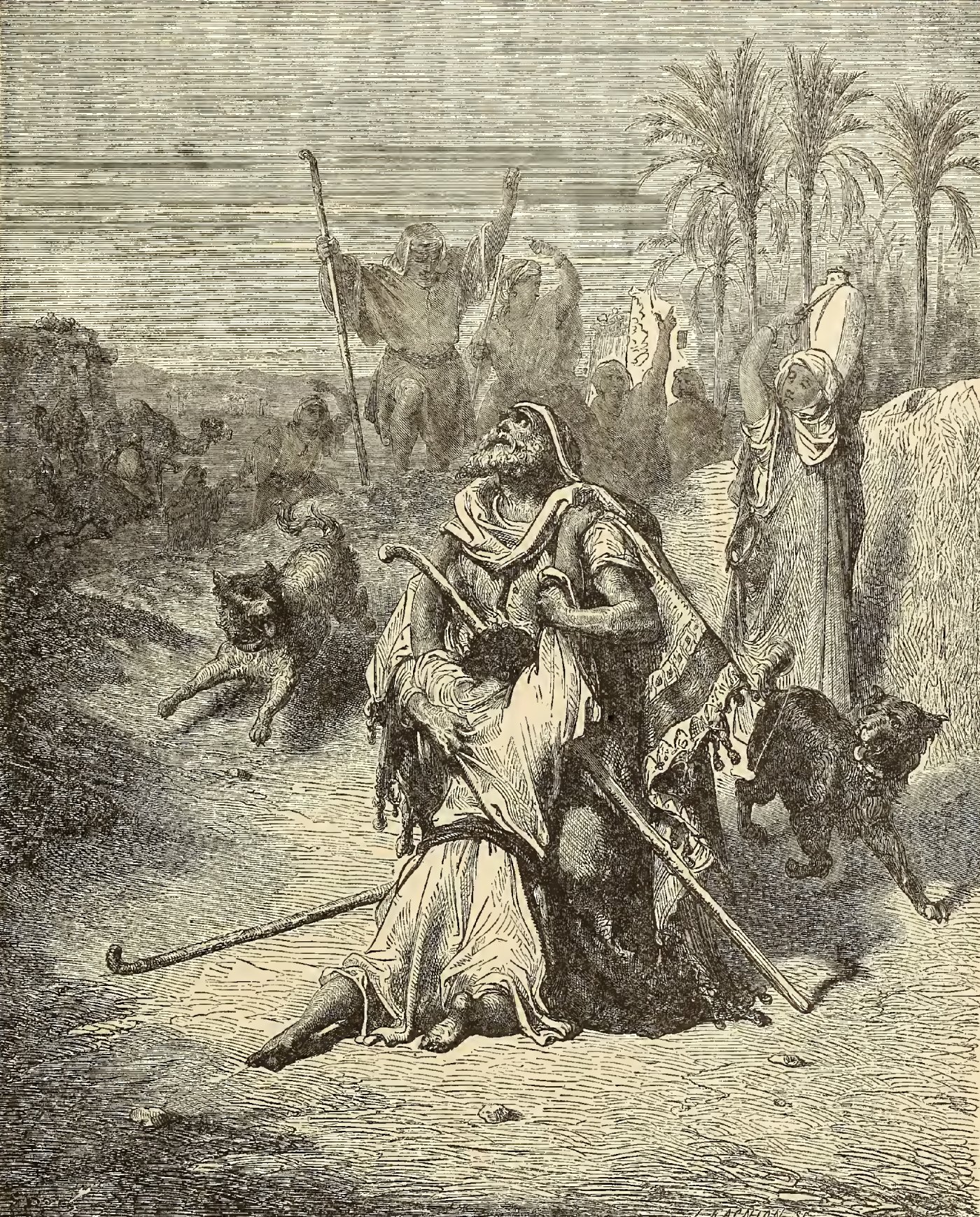
About this plate
A dusty road outside a village, palms and low walls behind. The son is on his knees in the road, barefoot, his staff dropped on the ground beside him. The father is bent over him, arms round his shoulders and head against him. Dogs are running in from both sides. Further back, figures on the road have their arms in the air, and a woman by the wall has raised both hands.
This is the reunion, not the pigsty. Doré engraved the far country too; this is the other end of the parable.
The kneeling is the detail to watch. Luke does not say the son knelt. The son had a speech prepared and gets through less than half of it. Doré draws him down in the dirt with the words still unsaid and the father already arrived, which is the shape of the sentence exactly — when he was yet a great way off, before anything had been explained.
The dogs are Doré's own invention, and they are the best thing in it. Nobody in the household knows the theology yet. The dogs simply know someone is back.
Swipe left or right for the next plate