The Good Samaritan
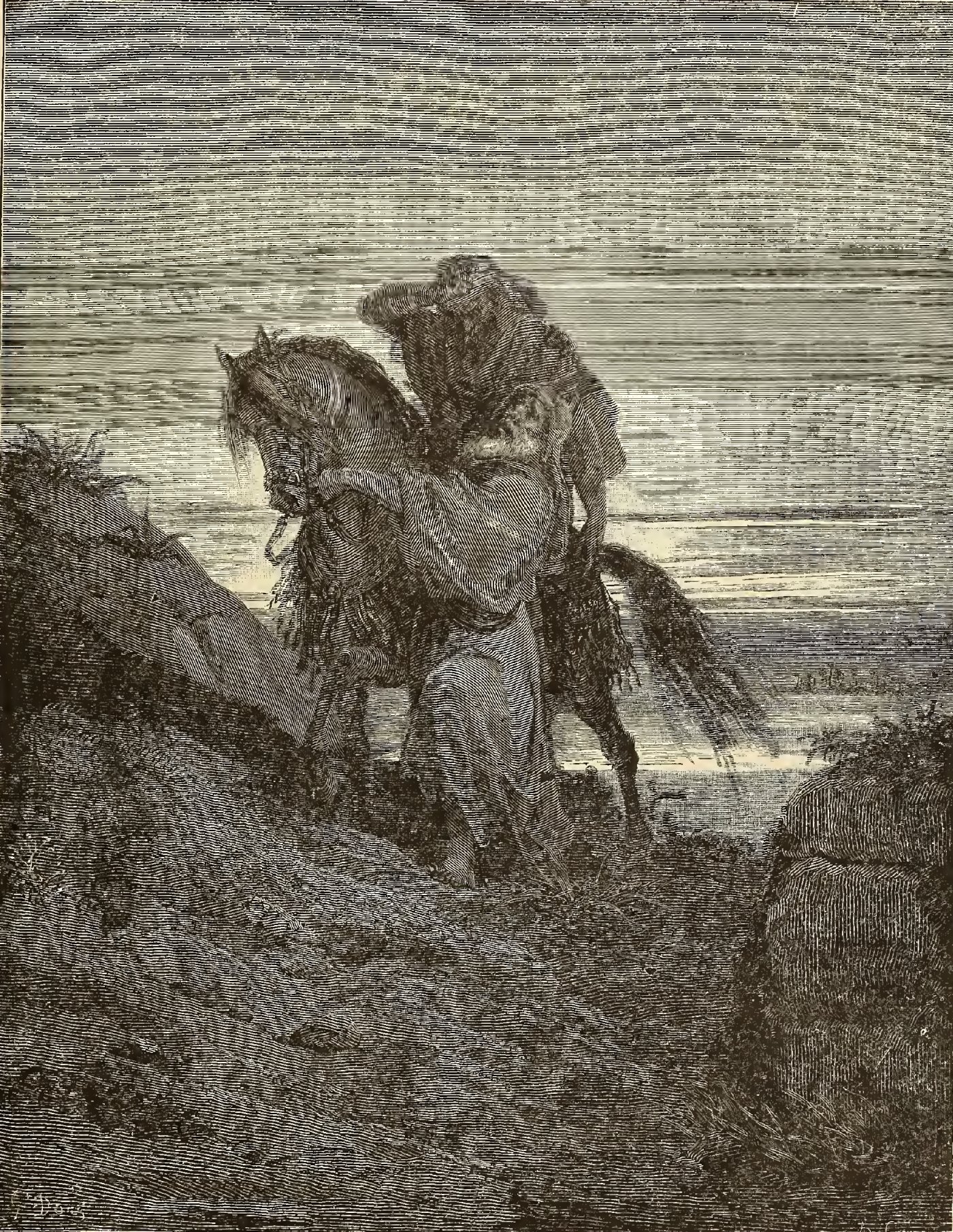
Gustave Doré, 1866 · Luke 10:33
The passage
But a certain Samaritan, as he journeyed, came where he was: and when he saw him, he had compassion on him,
Luke 10:33
About this plate
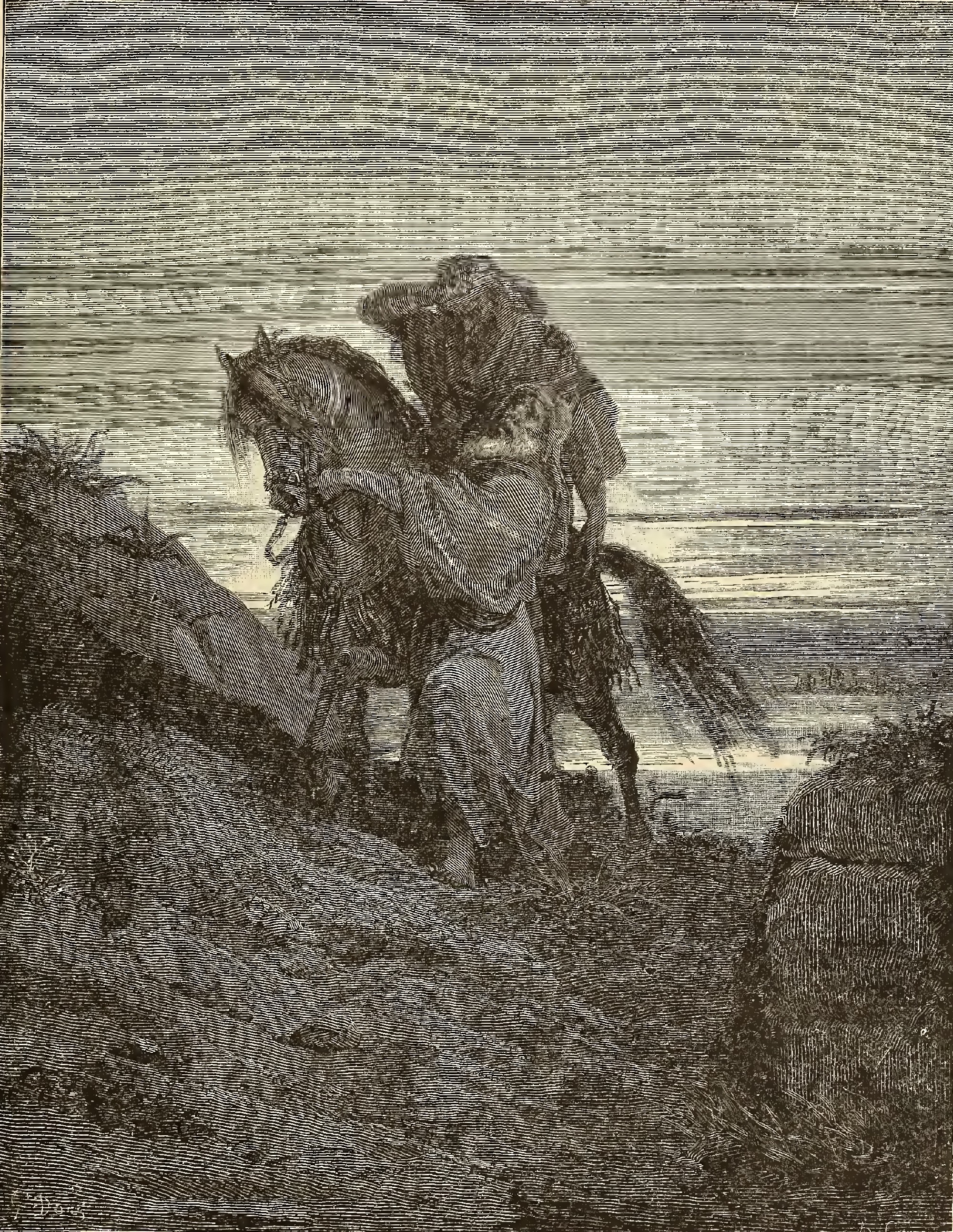
Dusk, on a bare ridge. A horse comes up the path toward us, and slung across its back is the wounded man, face down, arms hanging. The Samaritan walks alongside, on foot, one hand steadying the body. Behind them the sky is worked in long horizontal lines to the horizon, and the land is empty in every direction.
This is the only plate in the batch where nothing is happening at all. No violence, no miracle, no crowd. Two men and an animal, walking.
Doré's decision is to draw the part of the parable Jesus does not dwell on: the transport. The beating is offstage. The priest and the Levite are offstage. The inn is somewhere ahead in the dark. What is in the frame is the walking, which in the text takes half a clause and in life takes hours.
Note that the Samaritan is on foot. The verse says he set the man on his own beast, and Doré takes that literally enough to give up the saddle. The man with the horse is the one walking. The King James breaks the sentence with a comma and moves straight on. Doré stops it there and makes a whole evening of it.
Swipe left or right for the next plate